

What is a 3PL?
TL;DR: A third-party logistics provider (3PL) is an outside company that handles warehousing, transportation, and fulfillment on your behalf. The right 3PL reduces costs, speeds up delivery, and lets your team focus on growth. This guide covers 3PL services, provider types, key benefits, and how to choose the best partner.
Today’s supply chains are more complex than ever. Businesses ship across more channels, serve customers who expect faster delivery, and manage inventory across multiple locations. For many companies, handling all of this in-house stretches resources thin.
A third-party logistics provider (3PL) is an external company that manages some or all of a business’s logistics operations — from storing goods to coordinating freight and fulfilling orders. According to Armstrong & Associates, roughly 90% of Fortune 500 companies use 3PL providers, and according to the 2025 NTT DATA Third-Party Logistics Study, 25% more shippers are now outsourcing to 3PLs for greater business and technology value.". At Alpha Zero Logistics, we work with businesses across industries to streamline their supply chains. Below, we’ll cover what a 3PL does, the types of providers available, the benefits, and how to choose the right one.
What Services Does a 3PL Provide
3PL providers offer a range of logistics services, from warehousing to full-scale supply chain management. Most cover these core functions.
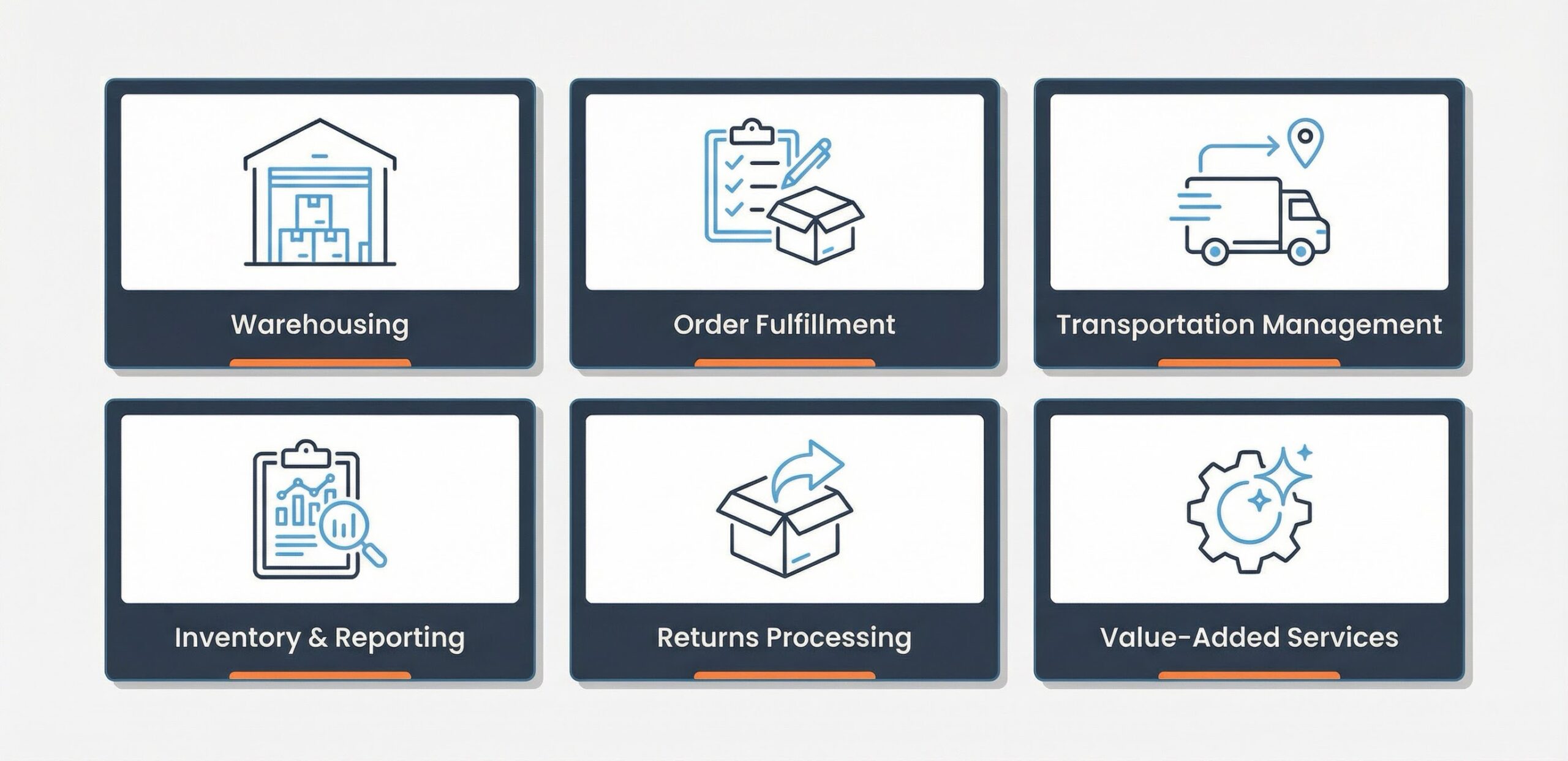
Warehousing and storage. A 3PL stores your inventory in professionally managed facilities, handling receiving, organization, and tracking. This eliminates the need to lease, staff, and maintain your own warehouse space.
Order fulfillment. This covers the pick, pack, and ship process. When a customer places an order, the 3PL picks the products, packages them, and ships them out. Leading providers integrate directly with e-commerce platforms for real-time processing.
Transportation and freight management. A core 3PL service that includes carrier selection, route optimization, and shipment tracking. Whether you need truckload, Less-Than-Truckload (LTL), or air freight, a 3PL coordinates it so goods move efficiently.
Inventory management and reporting. 3PLs provide real-time inventory visibility, demand forecasting, and analytics to help you maintain optimal stock levels and make data-driven decisions.
Returns management (reverse logistics). 3PLs handle the reverse logistics process — receiving returns, inspecting items, restocking, and updating records — so returns don’t bottleneck your operations.
Types of 3PL Providers
Not all 3PLs operate the same way. Understanding provider types helps you find the right fit.
Asset-based vs. non-asset-based. Asset-based 3PLs own trucks, warehouses, and equipment, offering more direct control. Non-asset-based providers coordinate through carrier and warehouse networks, delivering greater flexibility.
Industry-specific 3PLs. Some specialize in areas like e-commerce fulfillment, food and beverage cold chain, or manufacturing logistics. A provider that understands your industry’s requirements — temperature control, compliance, seasonal peaks — can significantly improve service quality.
Regional vs. national vs. global. Regional providers offer local expertise and fast response. National and global providers deliver broader reach for coast-to-coast or international distribution.
Benefits of Using a 3PL
Outsourcing logistics delivers measurable advantages. Here’s what businesses gain.
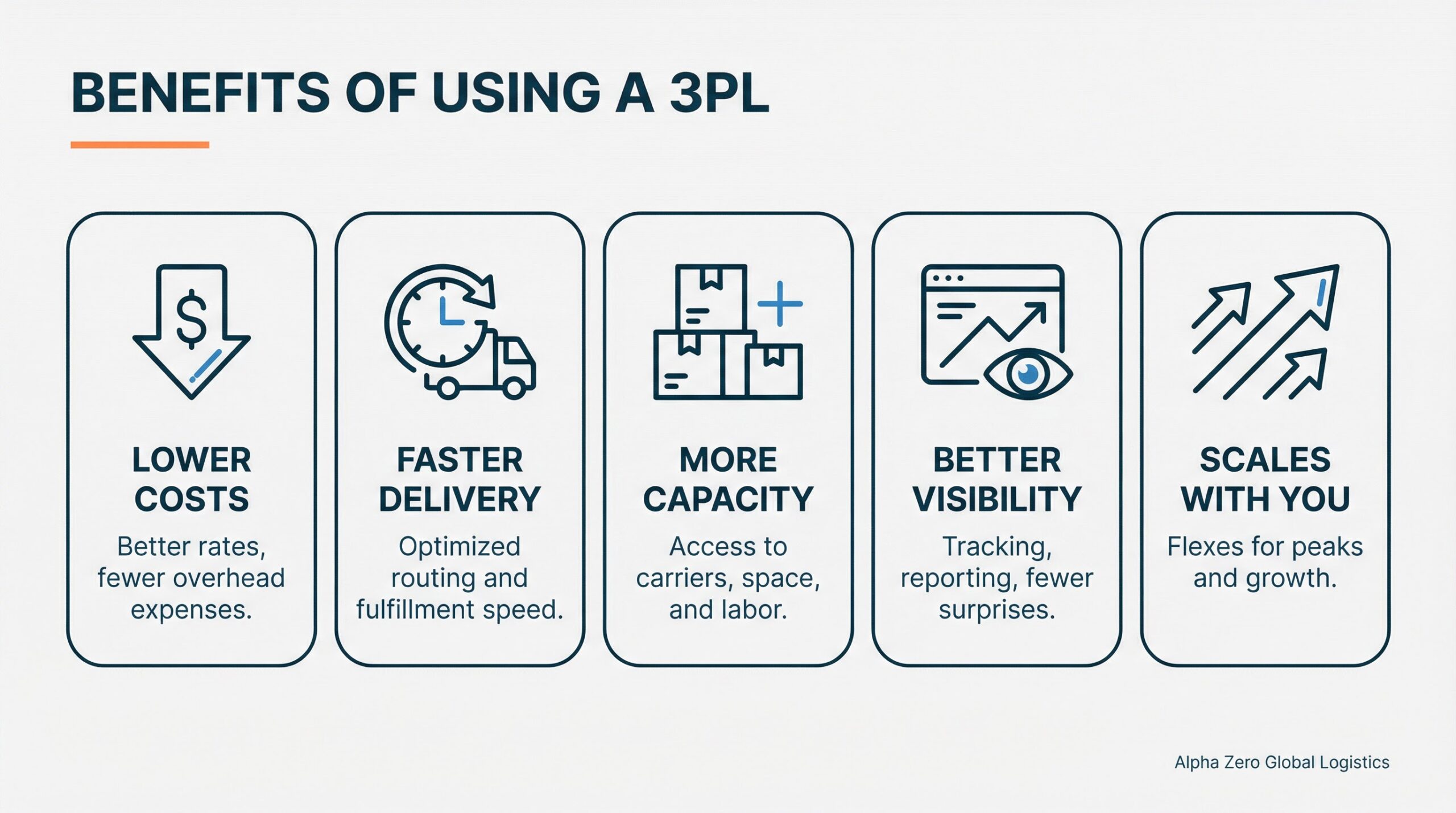
Cost savings and reduced overhead. A 3PL spreads infrastructure costs across clients, passing economies of scale to you. The 2024 Third-Party Logistics Study by NTT Data and Penske Logistics found that 89% of companies cited cost savings as their top priority in 3PL contract negotiations.
Scalability and flexibility. Seasonal spikes and new product launches require capacity that scales fast. A 3PL has infrastructure in place, so you can ramp up or down without long-term lease commitments.
Faster shipping and improved customer experience. Strategically located fulfillment centers position inventory closer to customers, reducing transit times and boosting satisfaction.
Access to expertise and technology. Leading 3PLs invest in Transportation Management System (TMS) platforms, warehouse management software, and real-time tracking that most businesses couldn’t justify buying independently.
Focus on core business growth. With logistics handled by a capable partner, your team can focus on product development, marketing, and customer acquisition.
How to Choose the Right 3PL
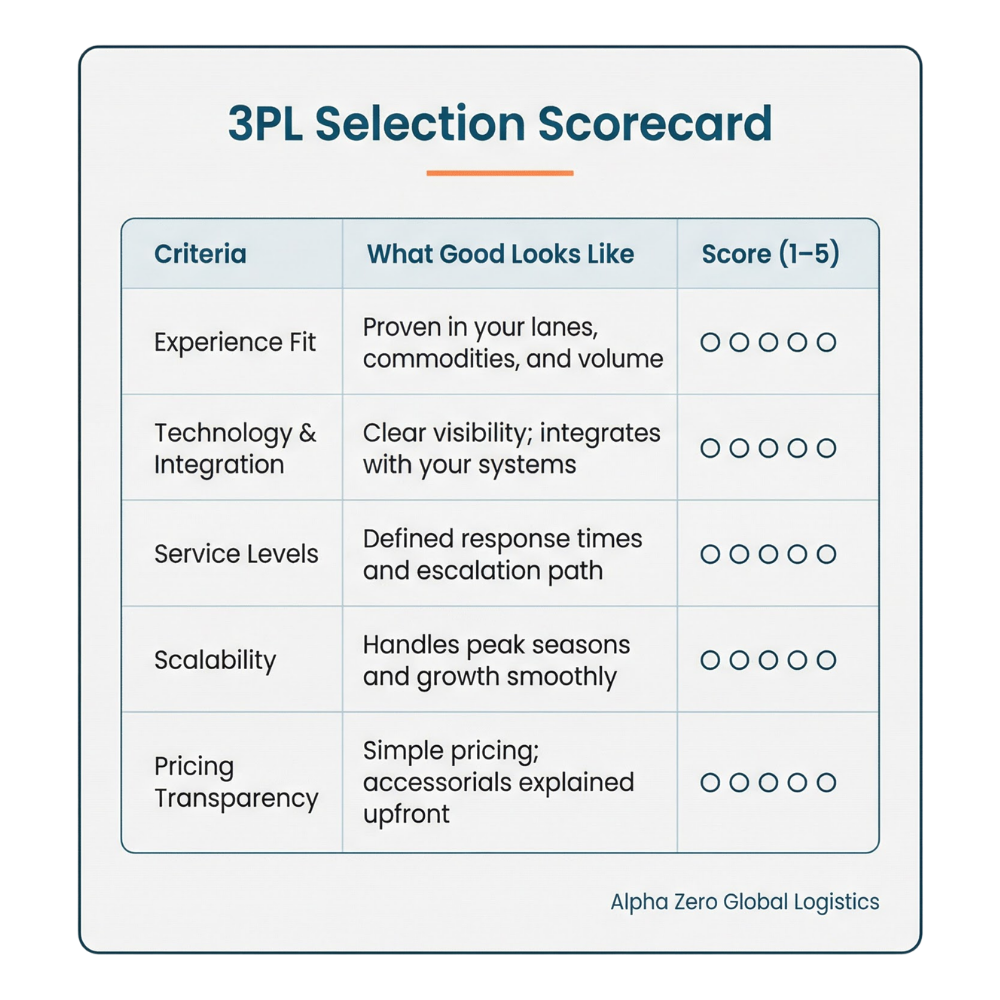
Selecting a 3PL is a strategic decision. Take a structured approach.
Key Factors to Evaluate
- Technology and integration — Can their systems connect with your Enterprise Resource Planning (ERP) system or e-commerce platform? Seamless electronic communication is essential.
- Industry experience — Do they understand your compliance requirements and seasonal patterns?
- Geographic coverage — Do their locations align with your customer base?
- Scalability — Can they grow with you as demand increases?
- Reliability — Ask for references. Trustworthiness and consistent performance are non-negotiable.
Questions to Ask a Potential 3PL
- What is your average order accuracy and on-time delivery rate?
- How do you handle seasonal spikes and complex requirements?
- What technology do you use, and how does it integrate with our systems?
- What does onboarding look like, and how long does it take?
- Can you provide references from clients in our industry?
Common Mistakes to Avoid When Selecting a 3PL
A poor 3PL selection leads to disruptions, hidden costs, and frustrated customers. Avoid these pitfalls.
Choosing based on price alone. A low-cost provider that delivers late or damages product costs more long-term. Evaluate total value, not just the rate sheet.
Overlooking technology compatibility. If systems can’t integrate, you’ll face manual workarounds and data gaps. Confirm compatibility before committing.
Not planning for future growth. Choose a provider that scales with you. Switching 3PLs mid-growth is disruptive and expensive.
Failing to define service-level expectations. Without documented key performance indicators (KPIs) — order accuracy, delivery timelines, resolution protocols — it’s hard to hold a 3PL accountable.
Why Partner With a Logistics Expert
The right 3PL relationship is a strategic partnership, not just a vendor contract.
An experienced logistics partner brings supply chain strategy, disruption anticipation, and continuous optimization. At Alpha Zero Logistics, alignment and trust are the foundation of every partnership. Our Managed Transportation Services combine dedicated account management, TMS technology, and network optimization to give you full visibility and control.
A smooth transition matters too. We invest in structured onboarding that minimizes disruption and gets you shipping quickly — because a strong start sets the tone for a strong partnership.
Frequently Asked Questions About 3PLs
What is the difference between a 3PL and a 4PL?
A 3PL (third-party logistics provider) handles the operational side of your supply chain — warehousing, fulfillment, transportation, and returns. A 4PL (fourth-party logistics provider) sits one layer above, managing multiple 3PLs and overseeing your entire supply chain strategy.
When should a business start using a 3PL?
There’s no single trigger, but common signs include: your team is spending significant time on logistics instead of core business activities, order errors or delays are increasing, you’re approaching peak season without scalable capacity, or you’re expanding into new regions. If logistics is becoming a bottleneck rather than a competitive advantage, it’s time to evaluate a 3PL partner.
How much does it cost to use a 3PL?
3PL pricing varies based on services used, order volume, storage requirements, and geography. Most providers charge across a few categories: receiving fees (per pallet or unit), monthly storage fees (per pallet or bin), fulfillment fees (per order or per item), and shipping costs (typically passed through at negotiated carrier rates). Many 3PLs also have monthly minimums. The best way to get accurate pricing is to request a custom quote based on your actual order volume and product dimensions.
Can a small business use a 3PL?
Yes, of course!. While large enterprises have long relied on 3PLs, many providers have served small and mid-sized businesses for decades. The key is finding a partner whose minimums, technology, and service offerings match your current scale with room to grow. A good 3PL should feel like a partner, not just a vendor, regardless of your size.
Conclusion
A third-party logistics provider can be one of the most valuable partners your business works with. By outsourcing warehousing, transportation, and fulfillment to a capable 3PL, you reduce costs, gain flexibility, and deliver a better customer experience.
The key is choosing the right partner — one that integrates with your operations, scales with your growth, and strengthens your entire supply chain. Evaluate carefully, ask the right questions, and prioritize long-term value.
Ready to explore how a logistics partner can support your business? Learn more about our Managed Transportation Services or speak with our team today.
Sources
- Logistics Management. (2017, May 24). The Armstrong report points to a continued increase in 3PL usage by shippers. Source
- Penske Logistics (Move Ahead). (2023, October 2). The 2024 Third-Party Logistics Study: Shippers, 3PLs draw on the power of partnerships. Source
- NTT DATA. (2025). Transforming the supply chain: 2025 Annual Third-Party Logistics Study. Source